
Advice for support people
Support people, don’t underestimate your importance during the birthing experience. This time in a woman’s life whether it is her first or third baby, is a complex mix of emotions—anticipation, excitement, reflection, vulnerability, uncertainty, hope, and deep longing.
Stepping into the role of birth partner or support person carries significant responsibility, is a position of great trust and should be viewed as a privilege.

Being present as a baby enters the world can be an incredibly meaningful and rewarding experience, but also exhausting, particularly if labouring for many hours through the night, or even for days. Just as the birthing woman prepares for labour, support people also benefit from preparing themselves for the physical and mental demands of the journey so they can offer steady, compassionate support when it is needed most.
What to know as a birth support person
Understand your role
A birth support person is not always the baby's other parent. Many women choose to include close friends, family members, student midwives, or doulas as part of their birth team. Whatever your relationship to the mother, your role is far more than simply being present in the room. You should not attend a birth as a spectator but rather have a conversation with the expectant mum about the reason why she chose you and her expectations of your role.
Every woman has different needs, preferences, and expectations during labour. Understanding how she would like to be supported by you—whether through encouragement, advocacy, practical assistance, or simply a calm presence—can help you feel more confident and ensure she feels truly supported throughout the experience. You have an opportunity to actively contribute to a safe, positive, and empowering environment for the woman bringing her baby into the world.
Understand her birth preferences
Consider attending antenatal education sessions with the expectant mother or accompanying her to some of her appointments with her midwife or obstetrician. These opportunities can help you develop a better understanding of labour, birth, available care options, and the range of situations that may arise along the way.
Take the time to become familiar with her birth preferences and understand what is most important to her. As a support person, you may play an important role in helping communicate her wishes and ensuring she feels heard and supported throughout the process. At the same time, it is helpful to remain open and adaptable, recognising that birth can be unpredictable and plans may need to change. Remember that everyone involved—the woman, her support team, and her healthcare providers are working towards the same goal: the wellbeing of both mother and baby.
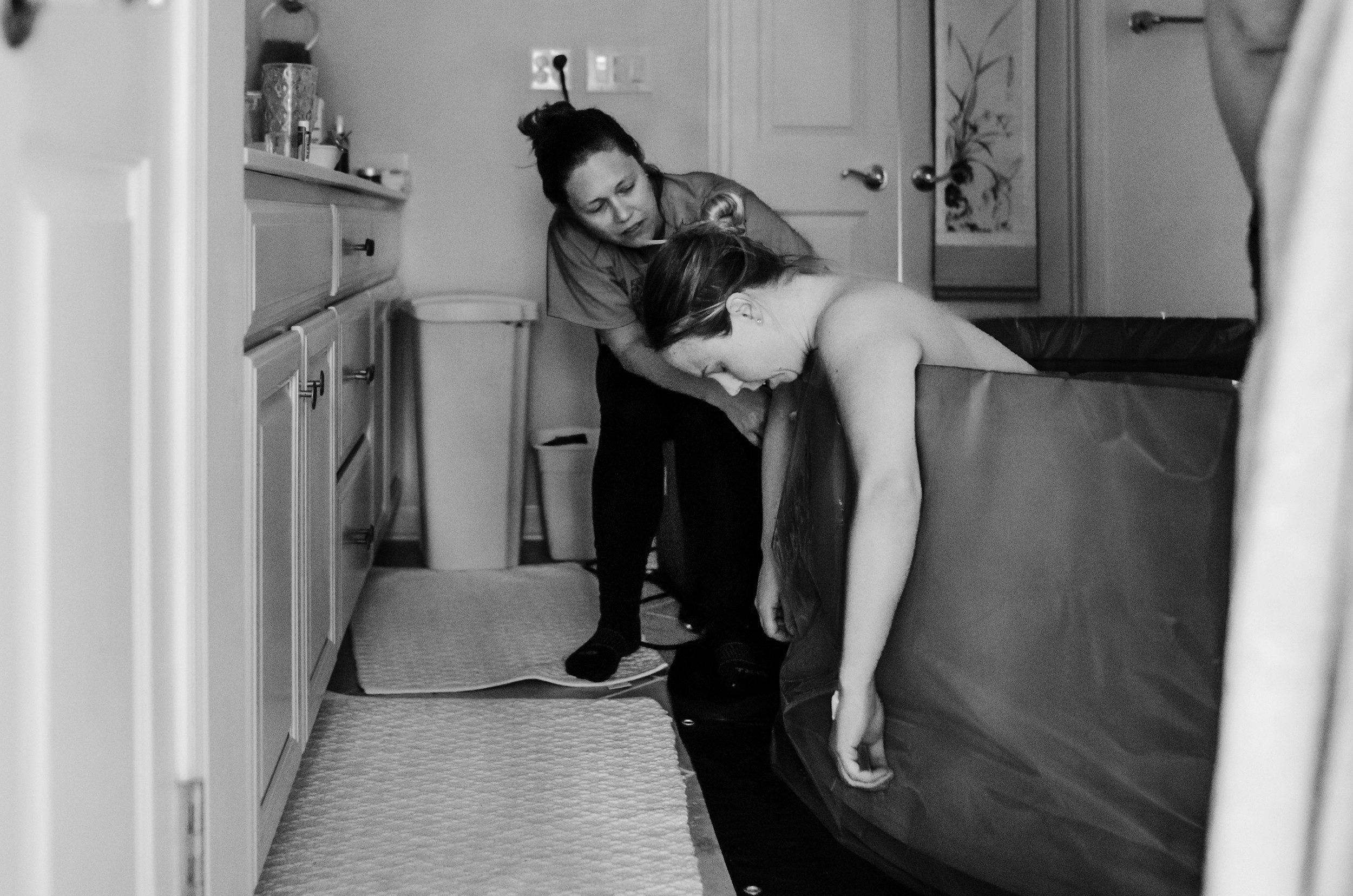
Remember this is her journey
Every birth experience is unique, and one of the most valuable things you can offer as a support person is to honour the her individual journey without comparing it to your own.
How can you offer support
Before Birth
Education yourself, attend antenatal education classes, and/or clinic appointments. The more informed you are, the more confident and effective your support will be.
Discuss her birth preferences, including if things deviate from the plan. Try asking questions like.. "if this happens... what will you choose?
Be attentive to her emotional state in preparation for birth. It is common for anxiety and self-doubt to increase in the final weeks of pregnancy, particularly in a culture where birth is often portrayed through fear-based narratives, dramatic media portrayals, or difficult birth stories. Offer reassurance, encouragement, and balanced information, becoming a steady and positive presence during this time.
Practical preparation is equally important. Work through a checklist together to ensure key tasks are organised ahead of time, including packing hospital and labour bags, installing the car seat, arranging care for pets, planning support for older children, and organising any other logistics that will help the family feel prepared when labour begins.
During labour & birth
Stay calm, and provide her with lots of positive encouragement.
If preparing for a caesarean, most often she will need to stay nil by mouth for a period of time. Ensure you eat something so as not to feel faint in the operating theatre.
If labouring, remember in the beginning stage, it’s very much a waiting game. You are there to offer encouragement and company before the marathon
Give her space to move freely, don't make her feel she is being observed by putting time pressures on her contractions. Early labour can be irregular and is a time to encourage rest/sleep. When active labour begins, the contractions will become regular and her body language will change to become primal behaviours (rocking, stamping, tapping hand, and heavy breathing). Her eyes will be closed most of the time during contractions or she may cover her face. Timing of contractions can now be helpful, but ultimately, she will know when it is time to transfer to the hospital by her own sense of safety.
Consider calling her care provider, hospital or birthing centre to notify them of her labour and progress.
Once there, help her settle into an unfamiliar environment by setting up the room with familiar smells (consider aromatherapy or massage oil ), and music (playlist she has prepared). Ask to keep lights dimmed or off if not already (a common practice in birth rooms), there may be the option of using fairy lights.
Ensure she remains hydrated - offer or gesture for her to take sips of water frequently or ice to crunch, and offer her snacks (dont ask repeatedly, women often do not like to eat a lot).
Support her to change positions, you may have to support her weight if leaning into you, or squatting. Help her in and out of the shower or bath.
Help her concentrate on breathing and positive self-talk. At the end of each contraction, encourage her to drop her shoulders, relax her face and hands as this ensures her pelvic floor also relaxes.
Massage her, hold her hand, and wipe her face, back of the neck and hair with cool cloths.
Keep other family members updated if this is her wish.
Support her to make decisions, women often don't articulate a lot in labour due to the unique capacity of the human brain to quieten our normally conscious awareness as a result of circulating labour hormones (oxytocin and endorphins). This is an extraordinary gift of evolution, these hormones are responsible for making the uterus contract, and act as natural painkillers, but also released into the brain, stop the mind's constant reflection on the physically intense nature and progress of labour.
If the course of her labour requires medical intervention, your role is to help her understand the options available after discussions with care providers - let her make her own choice, then support her decision.
During the pushing stage, provide lots of encouragement, you may need to assist with holding her in a position.
When the baby is being born, help her bring bub onto her bare chest for skin-to-skin, you will more than likely be offered the scissors to cut the cord, first ask if she wants the honour of this.
After birth
The first 1-2 hours after birth is a time for mum and bub to bond and initiate breastfeeding if that is her choice and both mum and baby are well. This may be a time for additional support people to allow the two parents some private time together to marvel in what they made and their new family member.
Stay in the moment, don't immediately get on phones and call people, enjoy this precious miracle, and soak in all the wonder and possibilities of this new life on earth. Let baby hear your voice, feel your touch and your love.
There is a lot of activity still in the room after birth with cleaning up, weighing the baby, preparing for transfer to the ward. Packing up personal items and getting out clean clothes and toiletries is very helpful.
Assist the midwife in getting Mum up into the shower.
Now it’s your turn to bond! We encourage skin to skin with the other parent too.

Caring for yourself
Being a support person can be exhausting, so make sure you have a plan possibly with another support person to take some time out for a rest break, toilet break or short walk
Pack some snacks and drinks for yourself and wear comfortable clothing. Ensure you pack a spare set of clothes in case you get wet from the shower or cold in the air conditioning.
Pack your own toiletries to freshen up
If you feel negatively impacted in any way by the birthing experience, it is important you speak with one of the care providers to debrief

If you are her partner…
you are her home in a person!
You therefore are the most important person in the room (regardless of mode of birth)… she is in love with you… not the midwife, doctor, doula or anaesthetist… YOU.
You are her sense of safety, she knows your smell, your voice, your hold even with her eyes closed. The power of this you cannot under estimate for these are all her external senses that her nervous system needs and uses to co-regulate.
Love & Safety = Oxytocin💗
Remember
She will remember this moment for a lifetime. You have an impact on labour progression and how the mother feels about her experience. Although she is vulnerable, she does not need sympathy, offer encouragement, believe in her and be a pillar of strength when she needs you.
